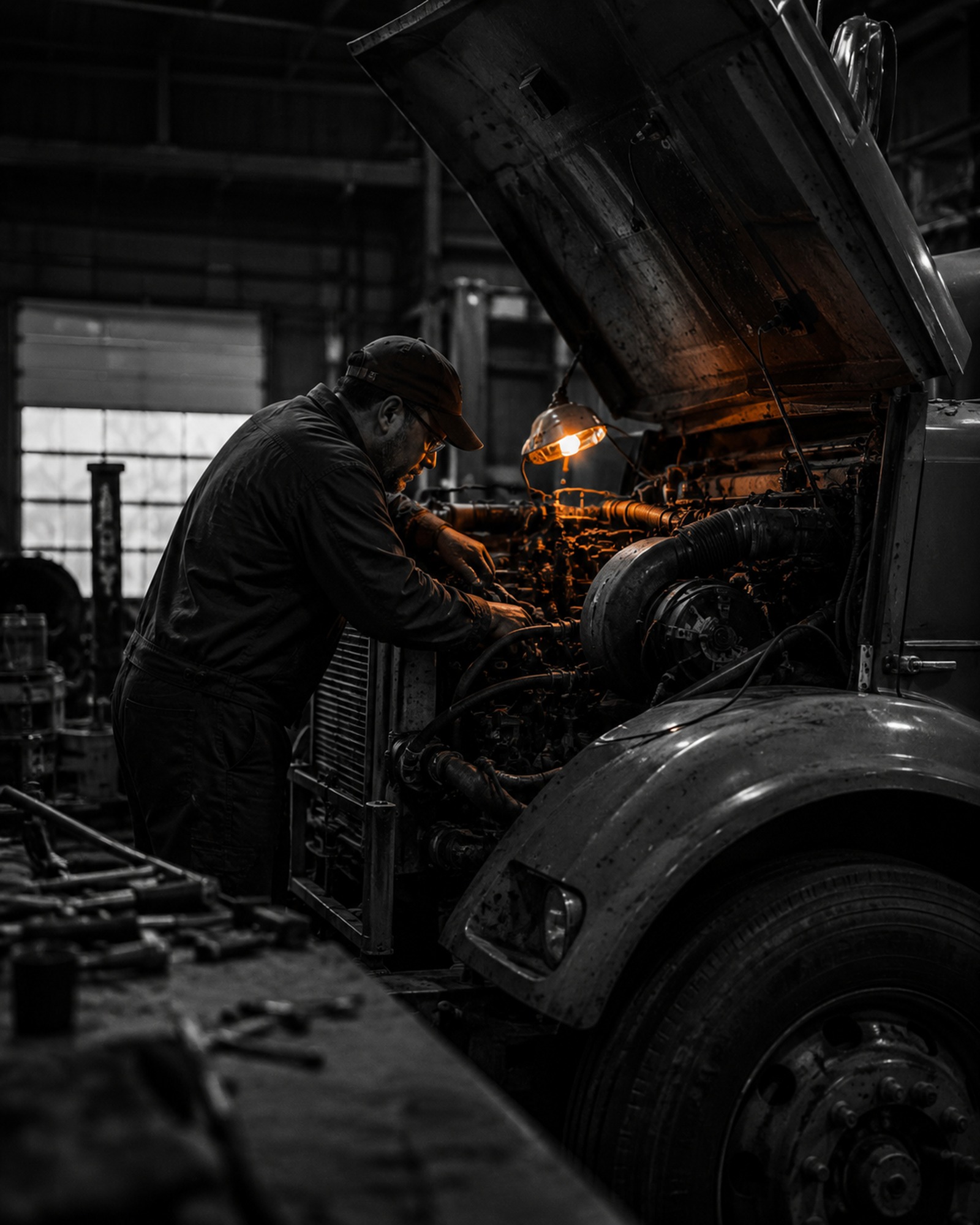
Nothing moves in this country without you.
Fleet trucks, heavy equipment, agricultural machinery — diesel mechanics keep the freight and equipment economy moving. This guide breaks down real pay by experience level and what actually moves the number.
Diesel Mechanic
The U.S. Bureau of Labor Statistics tracks this trade under "diesel service technicians and mechanics" — that category posted a median annual wage of $60,640 as of May 2024, the most recent OEWS data available. The BLS also projects employment growth of 2% from 2024 to 2034, with about 26,500 openings projected each year — driven almost entirely by retirements.
Entry level ($18–24/hr) is where most people start in this trade — typically through a formal apprenticeship, trade school program, or on-the-job training under a journeyman.
Journeyman ($28–40/hr) is where independent, unsupervised work authority kicks in — the point where most of the trade's workforce sits.
Master / top end ($42–58+/hr) covers senior specialists and crew leads — the people called in when the job is too complex or too urgent for anyone else.
Certified techs consistently earn more and get first look at higher-paying specialty roles.
Heavy equipment, marine diesel, and performance-tuning specialists earn well above general fleet-service rates.
Government facilities, wholesale trade, and large fleet dealerships tend to pay above independent shop rates.
States with heavy industrial and logistics demand — Alaska, Washington, North Dakota — pay well above the national median.
“A rig rolls in dead, you're elbow-deep by 9, and by lunch it's back on the highway carrying half a state's groceries.”
— A day in the life, Diesel Mechanic
Two-way street. Workers get matched to real openings. Employers get first look at qualified diesel mechanic talent before we go public with the board.
Jobs In DieselMechanic is one of 13 trade-specific sites in the Careers In Trades network.